
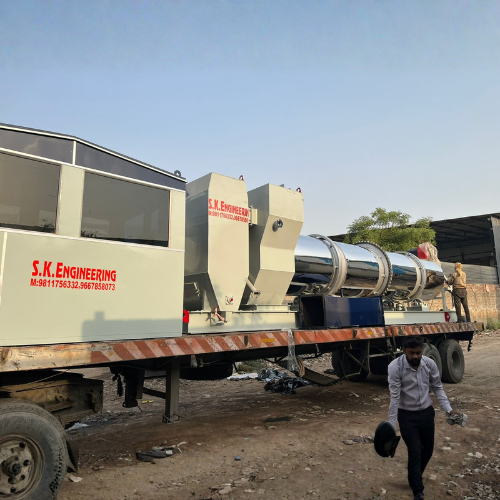
Description
A Drum Mix Plant is a continuous-type asphalt mixing plant used for large-scale road construction projects. It is designed for the efficient production of hot mix asphalt (HMA) by blending aggregates, bitumen, and fillers in a rotating drum.
Key Features & Specifications1. Capacity & Output
- Available in various capacities: 40 TPH, 60 TPH, 90 TPH, 120 TPH, 160 TPH, and 200+ TPH
- Continuous mixing process ensures high production efficiency.
- Suitable for highway construction, urban roads, and airport runways.
2. Components of a Drum Mix Plant
✔ Cold Aggregate Feeder Bins – Stores and regulates the flow of different-sized aggregates.
✔ Drying & Mixing Drum – Rotating drum with a burner for drying aggregates and mixing bitumen.
✔ Burner System – LPG, diesel, or gas burner for heating materials.
✔ Bitumen Storage Tank – Insulated tank to store and heat bitumen.
✔ Dust Collector System – Baghouse or wet scrubber for pollution control.
✔ Control Panel Cabin – PLC-based automation for monitoring and control.
✔ Filler Silo & Conveyor – For adding mineral fillers like lime or cement.
✔ Load-Out Conveyor & Storage Silo – Transfers hot mix asphalt to trucks for transportation.
Types of Drum Mix Plants
- Mobile Drum Mix Plant – Compact and portable, ideal for on-site applications.
- Stationary Drum Mix Plant – High-capacity plant for large-scale road construction.
- Counterflow Drum Mix Plant – Advanced design with separate drying and mixing zones for better efficiency.
Advantages of a Drum Mix Plant
✔ Continuous Production – Ideal for large projects requiring consistent asphalt supply.
✔ Energy Efficient – Optimized fuel consumption with advanced burner technology.
✔ User-Friendly Automation – PLC-based control for precision and easy operation.
✔ Reduced Maintenance – Fewer moving parts compared to batch mix plants.
✔ Cost-Effective – Lower initial investment and operational costs.
Reviews
There are no reviews yet.